Think You Know GORE® Viabil®?
Think Again.
The Game-Changing Advantage of Holes.
Because maintaining cystic duct drainage shouldn't be an afterthought.
- Published: 12/4/2025
- 4 min
The Small Holes Making a Big Difference
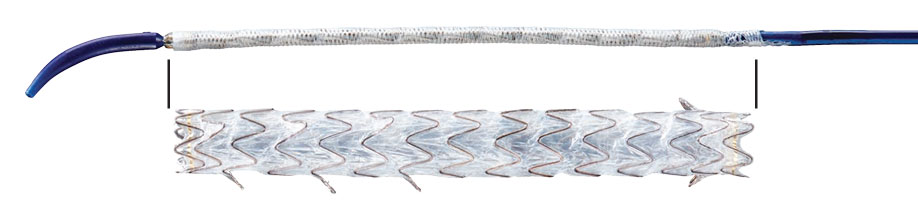
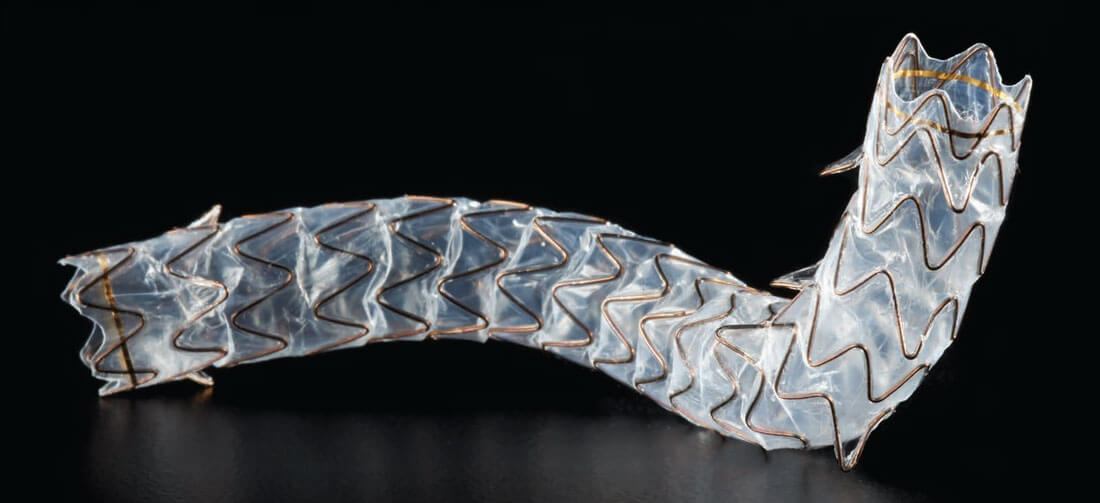
36 Fenestrations.
360° Function.
0 Exposed Wire.
The hole configuration of the GORE® VIABIL® is engineered specifically to allow for transmural drainage when navigating branch ducts, particularly the cystic duct.
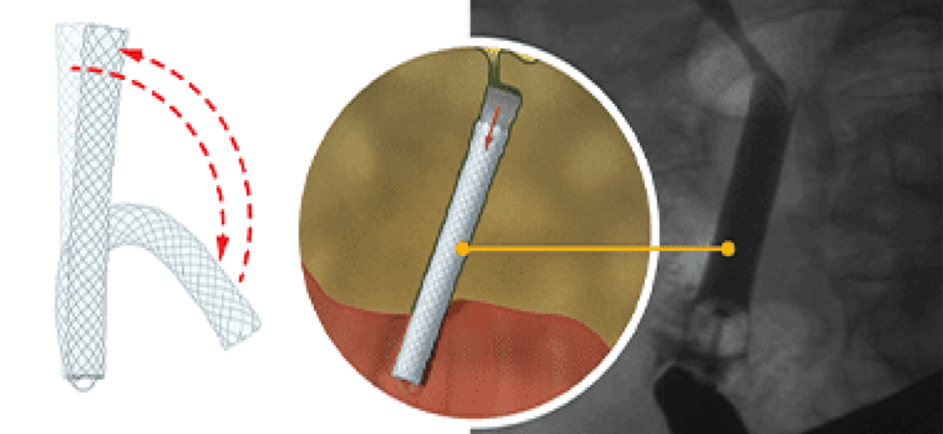
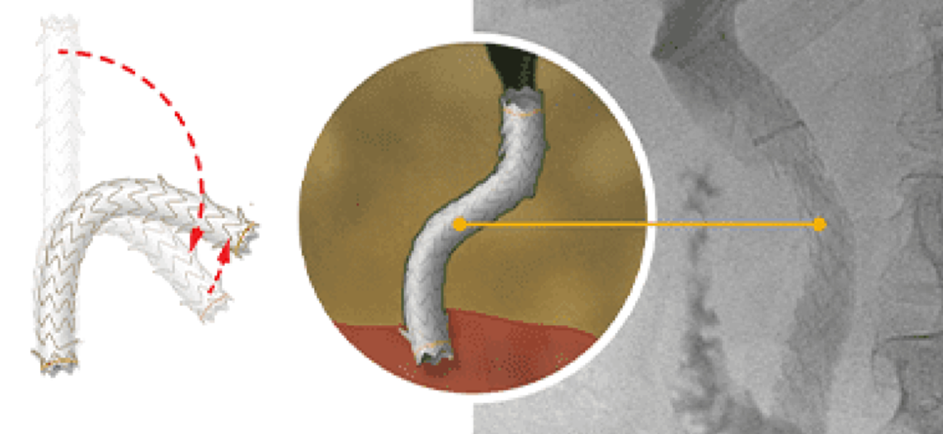
High Axial Force
Low Axial Force
Here’s what you’re working with:
The result? A stent that allows you to maintain patency in complex anatomy – without giving up the anti-migration technology the GORE® VIABIL® name is known for.2,3
Aim with Confidence: A Third Marker That Matters
Fluoroscopic Accuracy Where It Counts Most
That’s why the fenestrated version of GORE® VIABIL® includes a third radiopaque marker – clearly identifying the boundaries of the holed region. This means:
Choose the Right Size.
Match the Right Scenario.
The GORE® VIABIL® with Holes is available in 6 cm, 8 cm, and 10 cm lengths, allowing you to match the stent to a variety of patient anatomies and procedural needs.
Keep the Control You’re Used To
Placement Considerations – Think Strategically, Stent Tactically
Use the Anatomy to Guide You
Before choosing a stent with holes, consider the anatomy – and the implications:
Remember:
A Stent That Solves a Problem Before It Starts
Precision Placement. Proactive Protection.
You don’t want to find out post-procedure that the cystic duct was unintentionally blocked.
You don’t want to manage avoidable complications.
And you don’t have to.
Ready to See What Those 36 Holes Can Do?
Whether you're preserving cystic duct drainage or navigating complex biliary anatomy, GORE® VIABIL® gives you confidence from start to finish.
Let’s bring that level of control to your next case.
1
W. L. Gore & Associates, Inc; Biliary Fully Covered Metal Stents Systematic Review of the Clinical Literature. Flagstaff, AZ; 2019. [Work plan]. WP111272.
2 Isayama H, Nakai Y, Toyokawa Y, et al. Measurement of radial and axial forces of biliary self-expandable metallic stents. Gastrointestinal Endoscopy 2009;70(1):37-44.
3 Isayama H, Mukai T, Itoi T, et al. Comparison of partially covered nitinol stents with partially covered stainless stents as a historical control in a multicenter study of distal malignant biliary obstruction: the WATCH